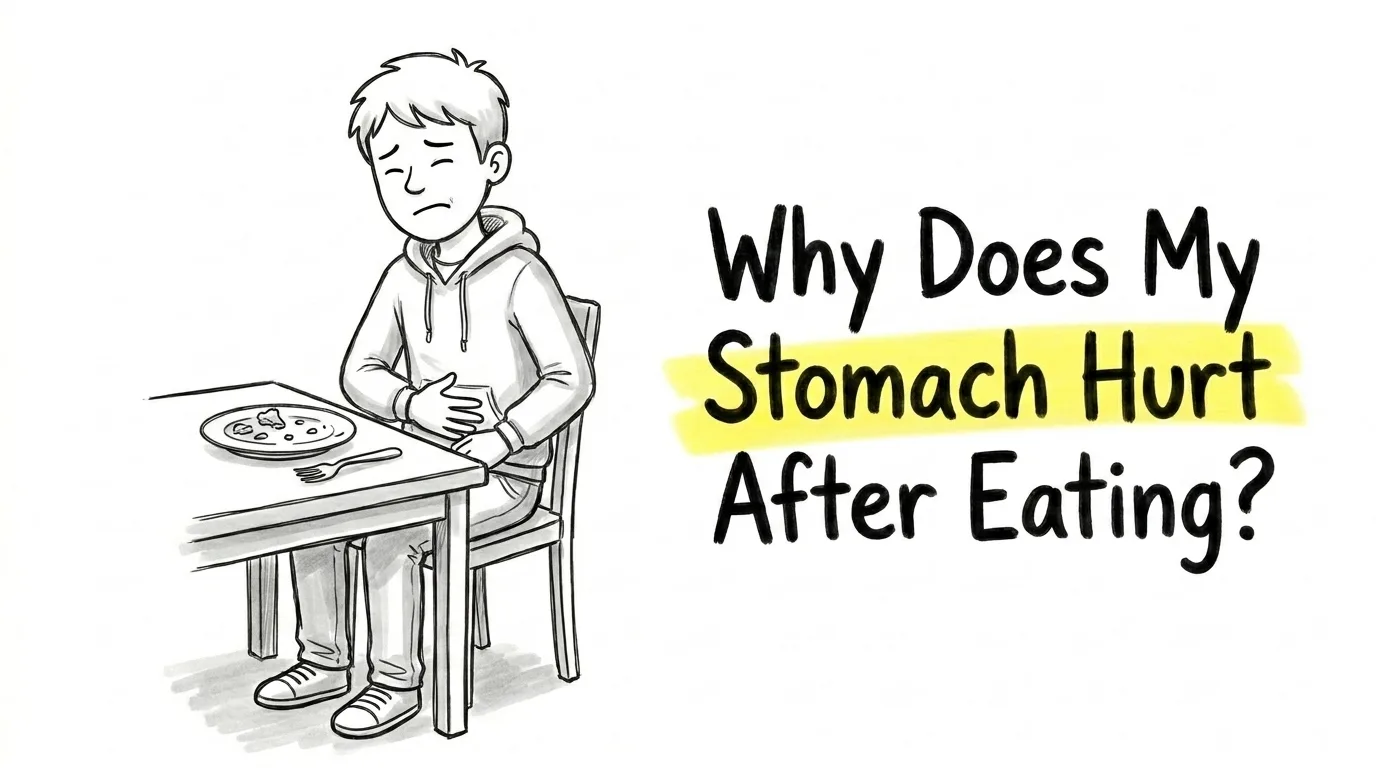
Almost everyone gets it sometimes: you finish a meal and your stomach turns unhappy, tight, burning, crampy, or just heavy and off. Most of the time it traces back to something simple about how or what you ate, and it passes on its own. The pain is a clue, though, and matching the type of pain to its cause is what tells you whether to slow down at dinner, skip the dairy, or actually see a doctor.
You ate too much, or too fast
The most common cause is also the most boring. A big meal stretches your stomach, and a full one can feel "full, hard and tight," as Cleveland Clinic puts it, sometimes with visible bloating. Eating fast makes it worse, because, as the NIDDK notes, "you swallow more air when you eat or drink too fast," and that trapped air adds pressure. Eat smaller portions, eat slower, and cut back on the carbonated stuff that adds gas. If the pain mostly shows up after big or rushed meals, this is probably your answer.
Rich, fatty, or fried food
Greasy food is hard work for your stomach. Cleveland Clinic explains that fatty meals "require more digestive effort, which means more acid and stronger contractions from your stomach," and fat is slow to leave the stomach, so a heavy meal sits there longer. That uncomfortable, weighed-down feeling after fast food has a name, indigestion (doctors call it dyspepsia), and its symptoms are "pain, a burning feeling, or discomfort in your upper abdomen," often with fullness and bloating.
That said, the NIDDK is careful to note that specific foods aren't a universal cause of indigestion, just that "certain foods or drinks may lead to symptoms for some people." So fatty food doesn't automatically bother everyone, it's a common trigger for people prone to it. (For the foods hardest on your gut in general, see The 10 Worst Foods for Your Gut Health.)
Acid reflux (heartburn)
If the pain is more of a burning that rises from your stomach toward your chest or throat, it's probably acid reflux. The NHS describes heartburn as "a burning feeling in the chest caused by stomach acid travelling up towards the throat." It tends to hit after meals for a reason: Cleveland Clinic notes that "heavy meals and fatty foods need more stomach acid to break down," and lying down after a big meal lets that acid travel back up more easily. The NHS says symptoms "are often worse after eating, when lying down and when bending over."
The everyday fixes are simple: eat smaller meals, don't eat within three to four hours of lying down, and go easy on the usual triggers (fatty and spicy foods, chocolate, coffee, and acidic things like tomatoes and citrus). Occasional heartburn is common and, in Cleveland Clinic's words, "nothing to worry about." It's worth seeing a doctor when it turns frequent, meaning reflux "twice a week for several weeks straight," which is the line for GERD, the chronic version.
A food that doesn't agree with you
Sometimes the problem isn't how much you ate but a specific food your body handles poorly. The classic example is lactose, the sugar in dairy. Lactose intolerance brings "bloating, diarrhea, gas, nausea, pain in your abdomen" (NIDDK), and the timing gives it away: symptoms usually appear "30 minutes to 2 hours after ingestion," according to StatPearls. Certain carbs called FODMAPs do something similar in sensitive people, especially those with IBS, where gut bacteria ferment them into gas and the stretching "causes exaggerated sensations of pain and discomfort," per Monash University.
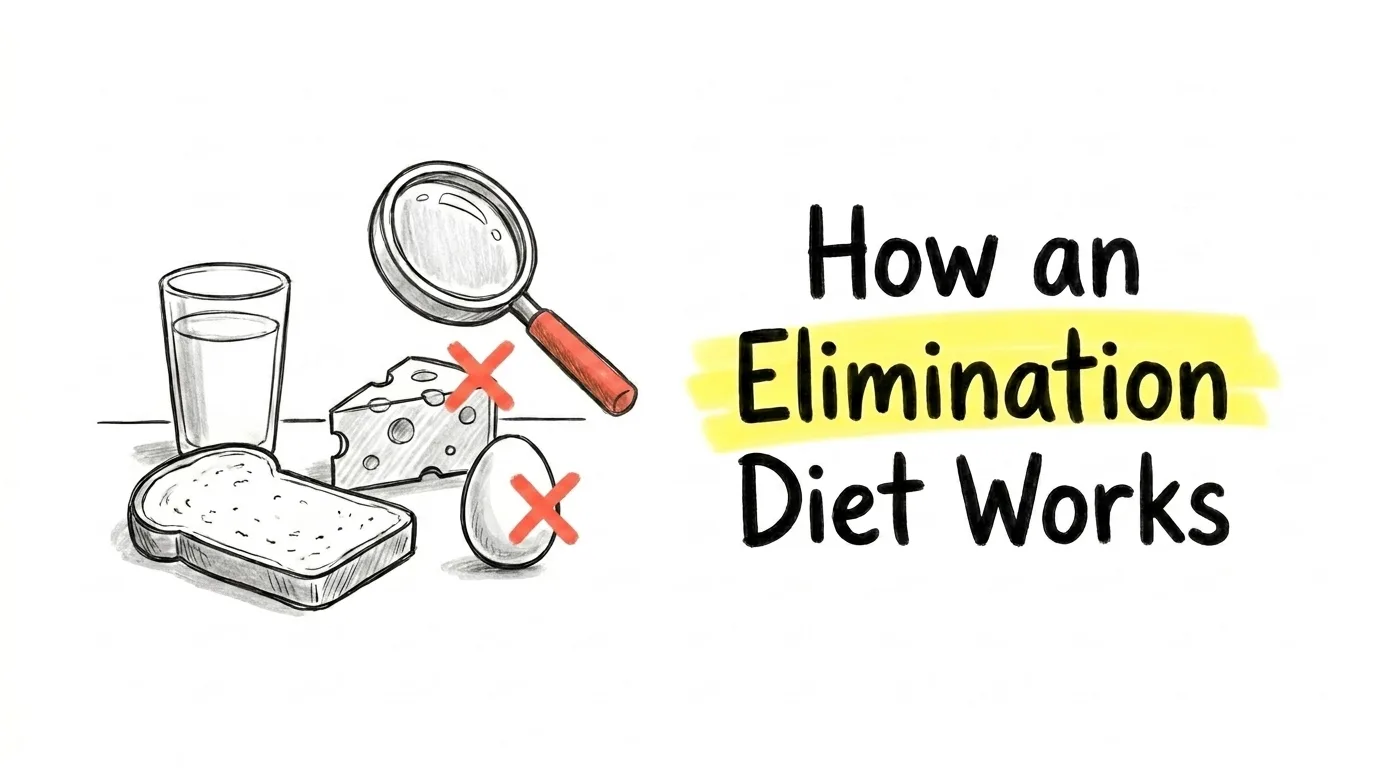
Triggers are personal, though, and you can react to a food that doesn't bother anyone around you. The NHS suggests keeping "a food and symptoms diary to help work out what may be triggering your symptoms." If a diary doesn't pin it down, an elimination diet is the structured version of the same idea, and it's worth doing right (see How an Elimination Diet Works).
Stress and nerves
Your stomach also answers to your mood. The gut and brain are in constant contact, and the American Psychological Association notes that "stress may make pain, bloating, nausea, and other stomach discomfort felt more easily," and can even "induce muscle spasms in the bowel, which can be painful." So if your stomach acts up before a test or during a rough week, the meal may not be the whole story. (Why You Get Butterflies In Your Stomach covers this connection in full.)
When it's more than a meal
Most stomach pain after eating is one of the things above, and Cleveland Clinic notes that most abdominal pain is "short-lived and not serious." A few patterns, though, point to something that needs a doctor rather than a diet tweak.
Pain in the upper-right part of your belly after heavy or fatty meals, sometimes lasting hours, can be gallstones; the NIDDK notes that "gallbladder attacks often follow heavy meals." A burning stomach pain that comes and goes, sometimes shifting right after you eat, can be an ulcer or an inflamed stomach lining (gastritis).
See a doctor, rather than experimenting on your own, if you have belly pain that's severe or keeps getting worse, pain or bloating that won't go away or keeps coming back, trouble swallowing, or weight loss you didn't try for. Get urgent help for the alarm signs the NHS lists: vomiting blood (or vomit that looks like ground coffee), or stool that's bloody or "black and sticky." Those mean stop guessing and get checked.
The bottom line
Stomach pain after eating is usually your body reacting to how much, how fast, or what you ate, and it usually clears with a small change: smaller meals, slower eating, less grease, or cutting a food that keeps causing trouble. Treat the pain as information. Match it to the cause, fix the everyday version, and know the short list of warning signs that mean it's time to see a doctor instead.
Sources
- Cleveland Clinic, Bloating
- NIDDK, Symptoms & Causes of Gas in the Digestive Tract
- Cleveland Clinic, Indigestion (Dyspepsia)
- NIDDK, Symptoms & Causes of Indigestion
- NHS, Heartburn and acid reflux
- Cleveland Clinic, Acid Reflux & GERD
- NIDDK, Acid Reflux (GER & GERD): Definition & Facts
- NIDDK, Symptoms & Causes of Lactose Intolerance
- StatPearls (NCBI Bookshelf), Lactose Intolerance
- Monash University, FODMAPs and Irritable Bowel Syndrome
- NHS, Food intolerance
- American Psychological Association, Stress effects on the body
- NIDDK, Symptoms & Causes of Gallstones
- NIDDK, Symptoms & Causes of Peptic Ulcers
- NHS, Stomach ache
- Cleveland Clinic, Abdominal Pain

.svg)
.webp)
.webp)



.webp)


.webp)
.webp)