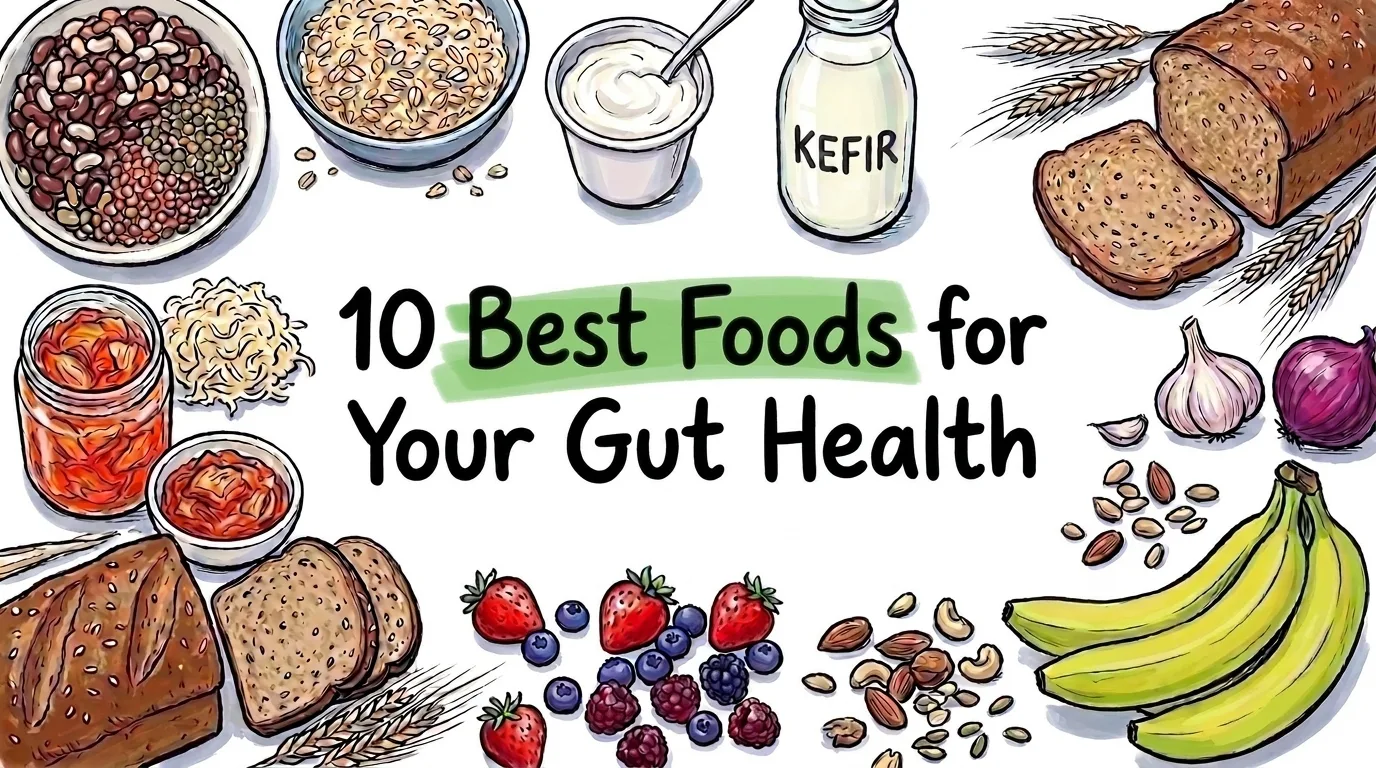
Search "best foods for gut health" and every list looks about the same, usually with something to sell you at the bottom. The real answer is cheaper and more ordinary than that. Your gut is home to trillions of bacteria (together, your microbiome), and they mostly want three things: fiber, a range of different plants, and a little fermented food. These ten deliver, and each one earns its spot for a reason worth knowing.
1. Beans and lentils
If you only change one thing, change this. The fiber in beans is the kind your body can't break down, so it travels all the way to your large intestine untouched, which is exactly the point. That's where your gut bacteria are waiting, and they ferment it into short-chain fatty acids, compounds that feed the cells of your gut wall directly. Half a cup does more than most fruits, and it costs pocket change.
Try it: Toss half a cup into tacos, soup, or a rice bowl.
2. Oats
Oats are a prebiotic, which is a nicer way of saying they're food for your gut bacteria (not the bacteria themselves, that's probiotics). The specific fiber in them, called beta-glucan, is the kind your microbes love to ferment. Eat them regularly and you're feeding the good bacteria you already have, so more of them stick around.
Try it: Make overnight oats or a morning bowl, and skip the sugary instant packets.
3. Yogurt
Yogurt is milk that bacteria have already started breaking down for you. That's what makes it tangy, and it's why a good yogurt still has live cultures in it. The catch is that not every tub does. If the label doesn't say "live and active cultures," the bacteria were probably killed off before it reached you, and you're basically eating tangy pudding.
Try it: Have a cup with berries, and skip the heavily sweetened kinds.
4. Kefir
Kefir is yogurt's thinner, drinkable cousin, made by fermenting milk with a bigger crew of bacteria and yeasts. That wider mix is the point: more kinds of microbes going in generally means a more varied gut. It's also usually easier to handle if dairy bothers you, because the fermenting bacteria eat up a lot of the lactose first.
Try it: Drink it straight, or pour it over oats or granola.
5. Kimchi and sauerkraut
Kimchi (spicy fermented cabbage) and sauerkraut (its plainer German cousin) are vegetables that bacteria have soured over time, and those live bacteria come along for the ride. One rule keeps them worth eating: they have to be refrigerated. The shelf-stable jars have usually been heated, and heat kills the very bacteria you're after.
Try it: Add a few forkfuls on the side of a meal.
6. Garlic and onions
You won't sit down to a bowl of garlic, but it earns a spot anyway. Both garlic and onions are loaded with a prebiotic fiber called inulin, which your body can't digest and your bacteria treat as a feast. You don't need much. Cooking with them most days is enough to keep your microbes fed.
Try it: Use them as the base for sauces, stir-fries, and soups.
7. Berries
Berries bring two things at once. There's fiber, which you'd expect, and there's a set of colorful plant compounds called polyphenols, which your gut bacteria break down and seem to thrive on. The deep colors are the tell: the pigment that makes a blueberry blue is part of what your microbes are after.
Try it: Drop a handful on your yogurt or oats to knock out two of these at once.
8. Whole grains
A whole grain is just a grain with its outer layers still on, and those layers are where most of the fiber lives. Strip them off to make white bread or white rice and you strip off the part your gut wanted. Whole wheat, brown rice, barley, and oats keep it, which is why trading the white version for the brown one is one of the easiest upgrades you can make.
Try it: Swap white bread and white rice for the whole-grain versions.
9. Slightly-green bananas
A banana is better for your gut the less ripe it is. A firm, slightly-green one is full of resistant starch, a fiber-like carb that slips past your own digestion and reaches your bacteria intact. As it yellows and sweetens, that starch turns into sugar you absorb early, before your microbes ever get a share. Still a fine snack when ripe, just less of a gut food.
Try it: Grab one on the greener side, or slice it into oatmeal.
10. Nuts and seeds
Nuts and seeds pack fiber and healthy fat into a small handful, and seeds punch above their size. Chia and flax are especially high in fiber, and flax has a tough outer coat, so grinding it first helps your body actually get at what's inside. A spoonful goes a long way.
Try it: Sprinkle ground chia or flax on yogurt or oatmeal, or keep almonds around for a snack.
Variety beats any single food
Variety matters more than any single food here. Different microbes feed on different fibers, so a plate with beans, greens, oats, and berries supports a wider range of bacteria than the same salad every day. Nothing on this list is magic, and no powder or probiotic pill beats a plate with a lot of different plants on it. Lean on the cheap staples like beans and oats, add a little fermented food, and let variety do the rest.
Want to know what's working against your gut instead? See The 10 Worst Foods for Your Gut Health.
Sources




.svg)
.webp)
.webp)



.webp)


.webp)
.webp)